AWS in Production: Moving Beyond Knowing Services to Building Real Solutions
Knowing what EC2, S3 or RDS do is the easy part. Knowing when, why, and how to wire them together into something that survives real traffic is where cloud engineering actually begins.
Ask an engineer whether they “know AWS,” and you’ll usually get a list back: EC2, S3, IAM, VPC, RDS, ECS, CloudFront. It’s a fair answer, and knowing those services is real progress.
But that list is also where a quiet misunderstanding begins.
Knowing what a service does is the easy part, AWS has a page for that. The hard part, the part no certification really hands you, is knowing when to reach for it, why it beats the alternative, and how to combine it with a dozen others into something that stays standing when real users arrive.
Cloud engineering was never about collecting certifications or memorising service names. It’s about designing architectures that keep working when real traffic, real data, and real business pressure enter the picture.
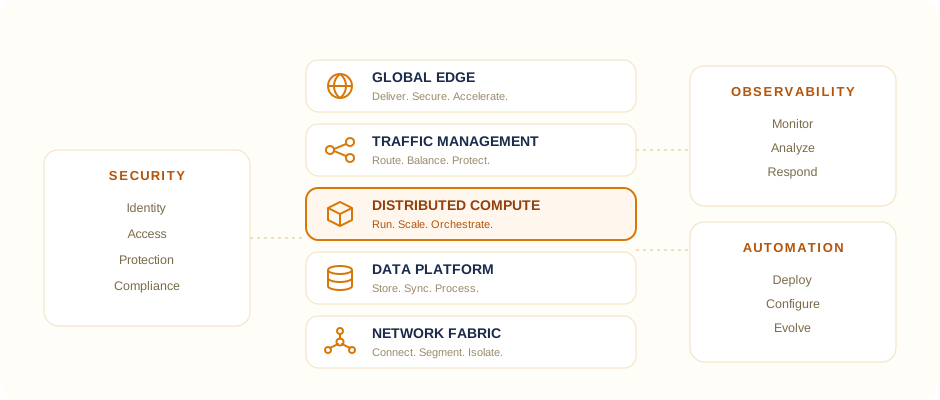
Beyond the Basics
Shipping something on AWS isn’t “launch an EC2 instance and deploy your code.” Every production workload is a chain of decisions, and each one has trade-offs:
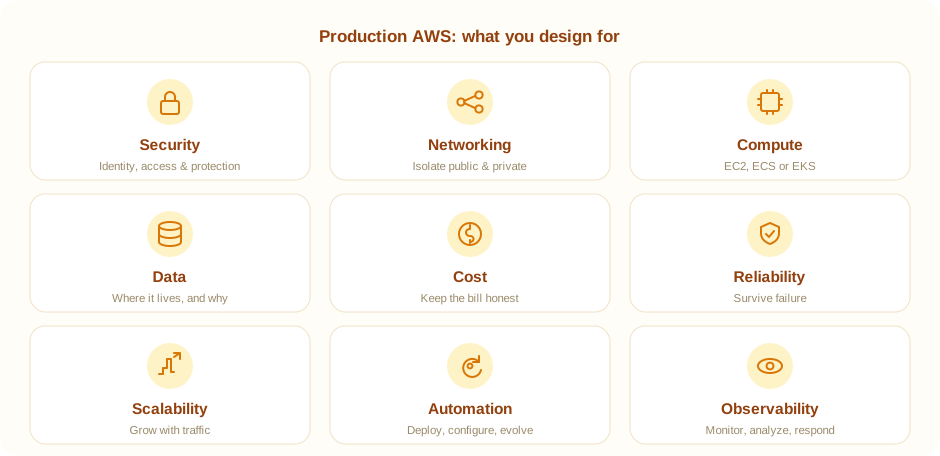
- How should the network be laid out so public and private resources stay properly isolated?
- Which compute model actually fits, plain EC2, containers on ECS, or Kubernetes on EKS?
- Where should the data live, and why there rather than somewhere cheaper or faster?
- How do services authenticate to each other without a credential leaking into a log?
- How do you keep an internet-facing app upright when someone points bad traffic at it?
- How does the system stay available when, not if, a piece of infrastructure fails?
- And once it’s live: how do you watch it, find the slow parts, and keep the bill honest?
Not one of these is answered by a single service. They’re answered by how the services fit together. That’s the difference between having an AWS account and running a production platform.
Designing for the Real World
Every AWS service exists to solve one specific problem well. The skill isn’t picking the most popular one, it’s picking the right combination for what your application actually needs: scale, security, availability, performance, and cost.
There is rarely a single “correct” architecture. The good answer depends on the trade-offs you’re willing to make and the situation you’re actually in. Learning the services gives you the vocabulary. Weighing those trade-offs is the grammar, and it’s what separates learning AWS from engineering on AWS.
Where this goes next
Closing that gap is exactly what the CloudMaven training program is built for. Not “here are two hundred services,” but: here’s how the pieces fit, here’s why you’d choose one path over another, and here’s what it takes to design, deploy, and operate real cloud applications.
We’ll work through AWS from the fundamentals to production-grade builds, the kind of practical, decision-first cloud skills that hold up inside a real DevOps team.
More soon.